AF
Arc-flash fibre loop sensor
Bare optical fibre routed through switchgear that picks up arc light anywhere along its length.
SLD / Schematic
Light sensor in a switchgear compartment that detects the flash of an internal arc and signals an arc-flash relay.
In plain English
A point light sensor is mounted inside a switchgear compartment, such as a breaker or cable compartment, and detects the intense light of an internal arc. It is wired or fibre-connected to an arc-flash relay that usually also checks for overcurrent before tripping, so light alone from an external source does not cause a trip.
The drawing should show which compartment each sensor watches, because the trip zone depends on it. The symbol does not show sensitivity, field of view or the self-supervision used to detect a disconnected sensor.
Identify the compartment each sensor covers. Check whether trip needs light plus overcurrent. A point sensor covers one compartment; a fibre loop sensor covers a long area such as a busbar run.
Light sensor in a switchgear compartment that detects the flash of an internal arc and signals an arc-flash relay. A point sensor covers one compartment; a fibre loop sensor covers a long area such as a busbar run.
Read the source: SEL-C804 multimode arc-flash detection fibre-optic cables
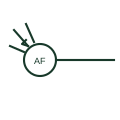
A point light sensor is mounted inside a switchgear compartment, such as a breaker or cable compartment, and detects the intense light of an internal arc. It is wired or fibre-connected to an arc-flash relay that usually also checks for overcurrent before tripping, so light alone from an external source does not cause a trip.
The drawing should show which compartment each sensor watches, because the trip zone depends on it. The symbol does not show sensitivity, field of view or the self-supervision used to detect a disconnected sensor.
A point sensor covers one compartment; a fibre loop sensor covers a long area such as a busbar run.
These public references support the explanation and provide further detail. Their graphics and downloadable files remain with their publishers.
Public manufacturer page describing point and fibre arc-flash light sensing.
This illustration was authored independently by Elora Grid to explain the concept. It is not reproduced from a customer drawing, an official standard graphic or a manufacturer CAD file. Its correspondence to an exact IEC or IEEE symbol identifier has not been certified.
SVG and DXF downloads contain this original artwork. DXF uses unscaled drawing units; a GA envelope supplies no product dimensions, clearances or fabrication information. Original artwork is available under CC BY 4.0. Third-party references retain their own terms.
Bare optical fibre routed through switchgear that picks up arc light anywhere along its length.
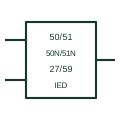
Single relay block on an SLD that lists the protection functions it provides, with CT, VT and trip connections.

A generic arrangement object linking switching equipment to its manufacturer drawings.
Elora Grid helps electrical teams work with drawings, specifications and equipment information. Explore the drafting workflow or join the early-access waitlist.