PHOTO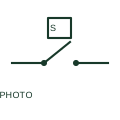
Photoelectric emitter-receiver switch
A photoelectric emitter-receiver device uses an optical path to determine a switching output.
Schematic
Combined photoelectric sensor form: Normally Closed Emitter-Receiver - DC Driven.
In plain English
A combined photoelectric sensor contains an emitter and a receiver within the same documented sensing unit. This entry identifies the normally closed emitter-receiver - dc driven form in the publisher's IEC-context family.
A reflective sensing arrangement can detect a passing object or a change in returned light and send the result to a control input. The normally-closed designation starts with a conducting output or closed contact in the documented reference condition; operation changes that state. This is the DC-supplied form. Preserve supply polarity and confirm the output circuit type from the device wiring diagram.
The combined housing does not establish whether a reflector or the target returns the light. Sensing mode, light-on or dark-on selection and pin functions need the selected product diagram.
Combined photoelectric sensor form: Normally Closed Emitter-Receiver - DC Driven. This entry adds the normally closed emitter-receiver - dc driven detail to the broader combined photoelectric sensor family. The combined housing does not establish whether a reflector or the target returns the light. Sensing mode, light-on or dark-on selection and pin functions need the selected product diagram.
Read the source: AutoCAD Electrical: Photoelectric emitter/receiver switches
Autodesk IEC-60617 Symbol Preview: Photoelectric Emitter/Receiver Switches, HPE12B16 / VPE12B16. This identifies the publisher's library context; exact IEC graphics and database identities are not asserted.
Shown as an independently authored educational illustration. Use the cited publication and drawing legend to verify the required drafting form.
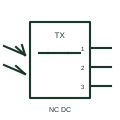
A combined photoelectric sensor contains an emitter and a receiver within the same documented sensing unit. This entry identifies the normally closed emitter-receiver - dc driven form in the publisher's IEC-context family.
A reflective sensing arrangement can detect a passing object or a change in returned light and send the result to a control input. The normally-closed designation starts with a conducting output or closed contact in the documented reference condition; operation changes that state. This is the DC-supplied form. Preserve supply polarity and confirm the output circuit type from the device wiring diagram.
The combined housing does not establish whether a reflector or the target returns the light. Sensing mode, light-on or dark-on selection and pin functions need the selected product diagram.
This entry adds the normally closed emitter-receiver - dc driven detail to the broader combined photoelectric sensor family. The combined housing does not establish whether a reflector or the target returns the light. Sensing mode, light-on or dark-on selection and pin functions need the selected product diagram.
These public references support the explanation and provide further detail. Their graphics and downloadable files remain with their publishers.
Public Photoelectric Emitter/Receiver Switches table explicitly lists HPE12B16 / VPE12B16 with this operating or connection form. Vendor graphics are linked, not copied.
This illustration was authored independently by Elora Grid to explain the concept. It is not reproduced from a customer drawing, an official standard graphic or a manufacturer CAD file. Its correspondence to an exact IEC or IEEE symbol identifier has not been certified.
SVG and DXF downloads contain this original artwork. DXF uses unscaled drawing units; a GA envelope supplies no product dimensions, clearances or fabrication information. Original artwork is available under CC BY 4.0. Third-party references retain their own terms.
A photoelectric emitter-receiver device uses an optical path to determine a switching output.
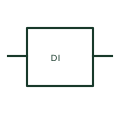
A PLC digital input reads a documented discrete electrical state from field wiring.

An identified electrical connection point linking schematic and wiring information.
Elora Grid helps electrical teams work with drawings, specifications and equipment information. Explore the drafting workflow or join the early-access waitlist.