CB
Circuit breaker
A switching device that can interrupt a circuit, with specified fault-interruption capability.
SLD / Schematic
Protective circuit-breaker form form: With Max. Thermal and Current Protection.
In plain English
The breaker form combines a switching element with named automatic release functions. Thermal, magnetic, residual-current and undervoltage indications describe different operating causes; their presence must be read individually rather than treating every breaker as having the same protection. This entry identifies the with max. thermal and current protection form in the publisher's IEC-context family.
On a feeder schematic, use the release indications to explain which measured condition can open the device. Put the selected trip settings, pole arrangement and supply dependencies in the equipment schedule and protection study, with the same breaker tag on both documents.
The illustration does not specify an interrupting rating, trip curve, selectivity or isolation certification. An undervoltage release is also different from a shunt-trip coil: the condition that causes release must remain explicit.
Protective circuit-breaker form form: With Max. Thermal and Current Protection. This entry adds the with max. thermal and current protection detail to the broader protective circuit-breaker form family. The illustration does not specify an interrupting rating, trip curve, selectivity or isolation certification. An undervoltage release is also different from a shunt-trip coil: the condition that causes release must remain explicit.
Read the source: Circuit-breaker symbol variants
Autodesk IEC-60617 Symbol Preview: 1 Pole Circuit Breakers, HCB11Q21 / VCB11Q21. This identifies the publisher's library context; exact IEC graphics and database identities are not asserted.
Shown as an independently authored educational illustration. Use the cited publication and drawing legend to verify the required drafting form.
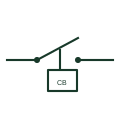
The breaker form combines a switching element with named automatic release functions. Thermal, magnetic, residual-current and undervoltage indications describe different operating causes; their presence must be read individually rather than treating every breaker as having the same protection. This entry identifies the with max. thermal and current protection form in the publisher's IEC-context family.
On a feeder schematic, use the release indications to explain which measured condition can open the device. Put the selected trip settings, pole arrangement and supply dependencies in the equipment schedule and protection study, with the same breaker tag on both documents.
The illustration does not specify an interrupting rating, trip curve, selectivity or isolation certification. An undervoltage release is also different from a shunt-trip coil: the condition that causes release must remain explicit.
This entry adds the with max. thermal and current protection detail to the broader protective circuit-breaker form family. The illustration does not specify an interrupting rating, trip curve, selectivity or isolation certification. An undervoltage release is also different from a shunt-trip coil: the condition that causes release must remain explicit.
These public references support the explanation and provide further detail. Their graphics and downloadable files remain with their publishers.
Public 1 Pole Circuit Breakers table explicitly lists HCB11Q21 / VCB11Q21 with this operating or connection form. Vendor graphics are linked, not copied.
This illustration was authored independently by Elora Grid to explain the concept. It is not reproduced from a customer drawing, an official standard graphic or a manufacturer CAD file. Its correspondence to an exact IEC or IEEE symbol identifier has not been certified.
SVG and DXF downloads contain this original artwork. DXF uses unscaled drawing units; a GA envelope supplies no product dimensions, clearances or fabrication information. Original artwork is available under CC BY 4.0. Third-party references retain their own terms.
A switching device that can interrupt a circuit, with specified fault-interruption capability.
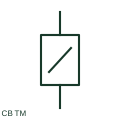
A thermal-magnetic breaker combines overload response with a magnetic response to high current.
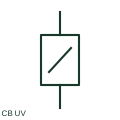
A breaker undervoltage release changes the breaker operating condition when its control voltage falls below the specified range.
Elora Grid helps electrical teams work with drawings, specifications and equipment information. Explore the drafting workflow or join the early-access waitlist.