Control GA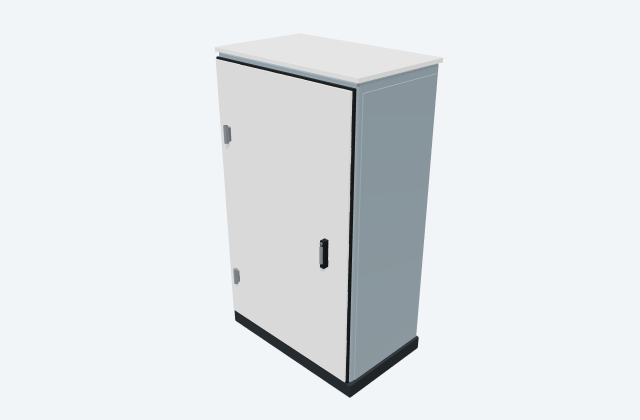
Control / marshalling cabinet
A generic cabinet organising control equipment, terminals and field interfaces.
General arrangement objects
In plain English
A battery charger supplies controlled electrical power to replenish a battery. Its charging method must suit the selected battery.
In a substation, a charger maintains the station battery so that protection and breaker control circuits have stored energy available when needed.
Use the selected manufacturer's drawings to check the equipment's size, mounting points and cable connections. The layout helps you plan where it fits and how it can be reached for maintenance. An illustrative 3D preview does not establish product dimensions or required clearances.
Read the source: SENS MicroGenius S4 battery charger: official source
An original 3D illustration of this equipment type. Rotate and zoom to explore its shape. It does not represent an exact manufacturer model or dimensional layout.

Drag to rotate · Scroll or pinch to zoom · Original educational visualisation. Relative proportions; use the selected manufacturer drawing for dimensions.
Coordinate the S4 charger enclosure with DC distribution and battery-cable termination space. Keep indicator access visible without routing conductors across the service face.
Use the linked manufacturer drawing or project mechanical files for dimensions and the exact selected revision. This original educational illustration is unitless and not to scale.
The S4 mechanical model is not interchangeable evidence for a MicroGenius 2 enclosure or an entire DC UPS cabinet.
These public references support the explanation and provide further detail. Their graphics and downloadable files remain with their publishers.
Official identity and available drawing scope; coordination guidance is independently written.
Elora Grid helps electrical teams work with drawings, specifications and equipment information. Explore the drafting workflow or join the early-access waitlist.