TVS BI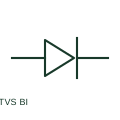
Bidirectional breakdown diode
A bidirectional breakdown diode provides a documented voltage-limiting semiconductor path in both polarities.
Schematic
IEEE-library form of bidirectional breakdown diode: a bidirectional breakdown diode provides a documented voltage-limiting semiconductor path in both polarities.
In plain English
This reference locates bidirectional breakdown diode in Autodesk's IEEE-oriented semiconductor components family. A bidirectional breakdown diode provides a documented voltage-limiting semiconductor path in both polarities. Its working voltage and surge characteristics determine the protective application. The public library uses HDI1_S00647 for its horizontal representation; this is a vendor block name, not an IEEE standards symbol number.
Follow the actual current path and terminal polarity in the surrounding circuit. The symbol identifies an electrical function; voltage, current, energy limits and the device package pinout come from the selected component data rather than from the outline.
Read working-voltage and breakdown specifications separately. Bidirectional protection does not make the component a controllable power switch. The linked functional counterpart explains the same operating role in its own drawing context; agreement of every detailed convention mark is not asserted.
IEEE-library form of bidirectional breakdown diode: a bidirectional breakdown diode provides a documented voltage-limiting semiconductor path in both polarities. Bidirectional protection does not make the component a controllable power switch.
Read the source: Autodesk IEEE Symbol Preview — Semiconductor Components
Autodesk IEEE Symbol Preview: Semiconductor Components, block HDI1_S00647. Matching functional counterpart linked separately. Independently drawn educational geometry; not a certified IEEE glyph or database identifier.
Shown as an independently authored educational illustration. Use the cited publication and drawing legend to verify the required drafting form.
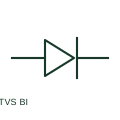
This reference locates bidirectional breakdown diode in Autodesk's IEEE-oriented semiconductor components family. A bidirectional breakdown diode provides a documented voltage-limiting semiconductor path in both polarities. Its working voltage and surge characteristics determine the protective application. The public library uses HDI1_S00647 for its horizontal representation; this is a vendor block name, not an IEEE standards symbol number.
Follow the actual current path and terminal polarity in the surrounding circuit. The symbol identifies an electrical function; voltage, current, energy limits and the device package pinout come from the selected component data rather than from the outline.
Read working-voltage and breakdown specifications separately. Bidirectional protection does not make the component a controllable power switch. The linked functional counterpart explains the same operating role in its own drawing context; agreement of every detailed convention mark is not asserted.
Bidirectional protection does not make the component a controllable power switch.
These public references support the explanation and provide further detail. Their graphics and downloadable files remain with their publishers.
Public IEEE-oriented Semiconductor Components table explicitly lists HDI1_S00647 as Breakdown Diode, Bidirectional. This supports the vendor convention context, not reproduction of the publisher graphic.
This illustration was authored independently by Elora Grid to explain the concept. It is not reproduced from a customer drawing, an official standard graphic or a manufacturer CAD file. Its correspondence to an exact IEC or IEEE symbol identifier has not been certified.
SVG and DXF downloads contain this original artwork. DXF uses unscaled drawing units; a GA envelope supplies no product dimensions, clearances or fabrication information. Original artwork is available under CC BY 4.0. Third-party references retain their own terms.
A bidirectional breakdown diode provides a documented voltage-limiting semiconductor path in both polarities.
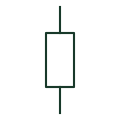
A resistive component with its value and purpose documented separately.
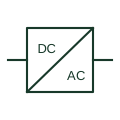
An identified interface converting electrical power between documented circuit forms.
Elora Grid helps electrical teams work with drawings, specifications and equipment information. Explore the drafting workflow or join the early-access waitlist.