BAT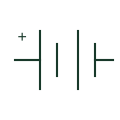
Battery
An electrochemical electrical source or storage element represented in a circuit.
SLD / Schematic
An identified interface converting electrical power between documented circuit forms.
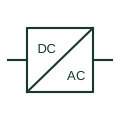
A power converter changes electrical power between the circuit forms specified for its application. In a battery energy storage system, a power conversion system commonly provides the interface between DC storage and an AC system. Direction of power flow and operating capabilities are product-specific.
The drawing should label the AC and DC interfaces and identify switching, protection and controls separately. A generic converter box does not establish grid-forming, grid-following, island operation or export capability. Those behaviours require the selected product and system documentation.
Inverter, converter and PCS can denote different equipment boundaries. Define what is included in the represented assembly.
These public references support the explanation and provide further detail. Their graphics and downloadable files remain with their publishers.
Manufacturer explanation of the DC-storage to AC power-conversion interface.
This illustration was authored independently by Elora Grid to explain the concept. It is not reproduced from a customer drawing, an official standard graphic or a manufacturer CAD file. Its correspondence to an exact IEC or IEEE symbol identifier has not been certified.
SVG and DXF downloads contain this original artwork. DXF uses unscaled drawing units; a GA envelope supplies no product dimensions, clearances or fabrication information. Original artwork is available under CC BY 4.0. Third-party references retain their own terms.
An electrochemical electrical source or storage element represented in a circuit.

A generic envelope for the selected power-conversion equipment and its interfaces.

A generic storage-equipment envelope linked to the selected battery system.

A switching device that can interrupt a circuit, with specified fault-interruption capability.
Elora Grid helps electrical teams work with drawings, specifications and equipment information. Explore the drafting workflow or join the early-access waitlist.