kWh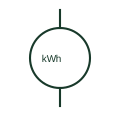
Active-energy meter
An active-energy meter accumulates active power over time.
SLD / Schematic
Energy meter with separate registers for energy flowing in each direction, as used at generation and solar connection points.
In plain English
A bidirectional meter records active energy in both directions on separate registers, usually labelled import and export. It is the normal meter at connection points with generation, batteries or solar, where energy flows to and from the network at different times of day.
Arrows on the symbol show the two directions, but what counts as import depends on where the meter sits and on the CT polarity. A reversed CT swaps the registers without any visible fault, so the direction convention must be checked against commissioning results.
Confirm which register is import and which is export. Check CT polarity against the stated direction. A bidirectional meter keeps separate import and export registers; a net register only keeps the difference.
Energy meter with separate registers for energy flowing in each direction, as used at generation and solar connection points. A bidirectional meter keeps separate import and export registers; a net register only keeps the difference.
Read the source: Power and energy measurement quantities · PowerLogic ION9000 user manual
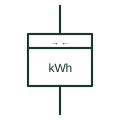
A bidirectional meter records active energy in both directions on separate registers, usually labelled import and export. It is the normal meter at connection points with generation, batteries or solar, where energy flows to and from the network at different times of day.
Arrows on the symbol show the two directions, but what counts as import depends on where the meter sits and on the CT polarity. A reversed CT swaps the registers without any visible fault, so the direction convention must be checked against commissioning results.
A bidirectional meter keeps separate import and export registers; a net register only keeps the difference.
These public references support the explanation and provide further detail. Their graphics and downloadable files remain with their publishers.
Public explanation of energy and power measurement quantities used by meters.
Public meter manual describing measurement, logging and recording features of a revenue and power-quality meter.
This illustration was authored independently by Elora Grid to explain the concept. It is not reproduced from a customer drawing, an official standard graphic or a manufacturer CAD file. Its correspondence to an exact IEC or IEEE symbol identifier has not been certified.
SVG and DXF downloads contain this original artwork. DXF uses unscaled drawing units; a GA envelope supplies no product dimensions, clearances or fabrication information. Original artwork is available under CC BY 4.0. Third-party references retain their own terms.
An active-energy meter accumulates active power over time.

General rectangle-with-band form for instruments that totalise a quantity over time, such as energy meters.
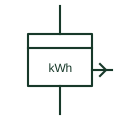
Energy meter that sends a pulse output proportional to energy for remote counting, totalising or building management.
Elora Grid helps electrical teams work with drawings, specifications and equipment information. Explore the drafting workflow or join the early-access waitlist.