INV DC-AC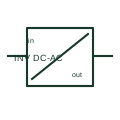
DC-to-AC inverter
A DC/AC inverter converts a documented DC supply into an AC output.
SLD / Schematic
In plain English
Charging energy measurement records the electrical energy passing through the defined measuring point.
A station can use the measurement to report energy delivered during a charging session.
Locate the measuring point on the power path and label whether it is on the AC input or DC output side. Energy adds up over time, whereas power is a rate at a particular moment. The location matters because losses between two points can make their recorded energy differ.
Conversion equipment and auxiliaries can consume energy between the two measuring points. Compare readings only after identifying their locations, time periods and the quantities each meter records.
Read the source: DC fast charging architecture
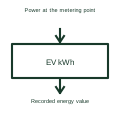
Measurement placement and system losses affect what an energy value represents.
These public references support the explanation and provide further detail. Their graphics and downloadable files remain with their publishers.
DC fast charging architecture: public technical context for the named function. Product and compliance details remain with the publisher.
This illustration was authored independently by Elora Grid to explain the concept. It is not reproduced from a customer drawing, an official standard graphic or a manufacturer CAD file. Its correspondence to an exact IEC or IEEE symbol identifier has not been certified.
SVG and DXF downloads contain this original artwork. DXF uses unscaled drawing units; a GA envelope supplies no product dimensions, clearances or fabrication information. Original artwork is available under CC BY 4.0. Third-party references retain their own terms.
A DC/AC inverter converts a documented DC supply into an AC output.
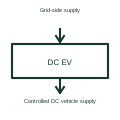
A DC charging station performs offboard power conversion and supplies controlled DC to the vehicle interface.
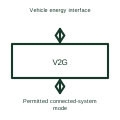
A bidirectional charging interface supports controlled energy transfer in both permitted directions.
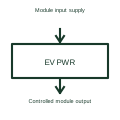
A charger power module is one conversion building block within a charging system.
Elora Grid helps electrical teams work with drawings, specifications and equipment information. Explore the drafting workflow or join the early-access waitlist.