FC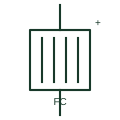
Fuel cell
An electrochemical source that converts hydrogen or another fuel directly into DC electricity, usually followed by a converter.
SLD / Schematic
A DC load that splits water into hydrogen and oxygen, supplied through a rectifier as a controllable sink in a microgrid.
In plain English
An electrolyser uses DC current to split water into hydrogen and oxygen. In microgrids and renewable hubs it acts as a large controllable load that can absorb surplus solar or wind generation, with the hydrogen stored for later use in a fuel cell or sold off site.
On a single-line diagram the electrolyser stack appears as a DC load fed from a transformer-rectifier or an active front-end rectifier. Large units show the rectifier transformer, harmonic filtering and a DC busbar to the stack; smaller units may be drawn as a single block labelled with the stack rating.
Thyristor rectifiers for large electrolysers draw significant harmonic current and reactive power, so filters or compensators may be needed. The symbol does not state ramp rate, minimum load or the gas plant constraints that limit how flexibly the electrolyser can follow generation.
A DC load that splits water into hydrogen and oxygen, supplied through a rectifier as a controllable sink in a microgrid. An electrolyser consumes electricity to make hydrogen; a fuel cell consumes hydrogen to make electricity.
Read the source: IEC graphical symbols for diagrams · Battery energy storage and power conversion
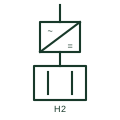
An electrolyser uses DC current to split water into hydrogen and oxygen. In microgrids and renewable hubs it acts as a large controllable load that can absorb surplus solar or wind generation, with the hydrogen stored for later use in a fuel cell or sold off site.
On a single-line diagram the electrolyser stack appears as a DC load fed from a transformer-rectifier or an active front-end rectifier. Large units show the rectifier transformer, harmonic filtering and a DC busbar to the stack; smaller units may be drawn as a single block labelled with the stack rating.
Thyristor rectifiers for large electrolysers draw significant harmonic current and reactive power, so filters or compensators may be needed. The symbol does not state ramp rate, minimum load or the gas plant constraints that limit how flexibly the electrolyser can follow generation.
An electrolyser consumes electricity to make hydrogen; a fuel cell consumes hydrogen to make electricity.
These public references support the explanation and provide further detail. Their graphics and downloadable files remain with their publishers.
IEC graphical symbol context for loads and conversion elements.
Public power conversion context for storage-type systems.
This illustration was authored independently by Elora Grid to explain the concept. It is not reproduced from a customer drawing, an official standard graphic or a manufacturer CAD file. Its correspondence to an exact IEC or IEEE symbol identifier has not been certified.
SVG and DXF downloads contain this original artwork. DXF uses unscaled drawing units; a GA envelope supplies no product dimensions, clearances or fabrication information. Original artwork is available under CC BY 4.0. Third-party references retain their own terms.
An electrochemical source that converts hydrogen or another fuel directly into DC electricity, usually followed by a converter.
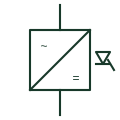
An AC-to-DC converter using thyristors fired at a controlled angle to set its DC output voltage.
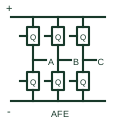
An actively switched AC/DC stage using a documented current-control and DC-link regulation arrangement.
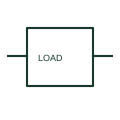
A generic electrical load identifies a documented consuming circuit or aggregate load on an SLD.
Elora Grid helps electrical teams work with drawings, specifications and equipment information. Explore the drafting workflow or join the early-access waitlist.