VREF-S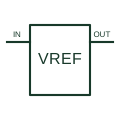
Series voltage reference
Provides a reference voltage through a series-connected supply and output arrangement.
Schematic
In plain English
An LDO is a linear voltage regulator designed to operate with its specified small input-to-output voltage headroom.
A circuit can use an LDO when the available supply is only moderately above the required output.
Use the same input/output distinction as for a linear regulator, but identify the required dropout conditions from the selected LDO. Low dropout describes its permitted voltage headroom, not zero loss or the ability to regulate from any input. Output-component and stability requirements remain device-specific.
Not as an ordinary assumption. The selected regulator needs its specified input conditions. Low-dropout operation reduces required headroom under defined conditions; it does not create a general step-up conversion function.
Read the source: Linear voltage regulation
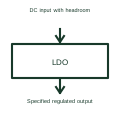
Low dropout does not mean zero loss or unrestricted operation below the required input voltage.
These public references support the explanation and provide further detail. Their graphics and downloadable files remain with their publishers.
Linear voltage regulation: public technical context for the named function. Product and compliance details remain with the publisher.
This illustration was authored independently by Elora Grid to explain the concept. It is not reproduced from a customer drawing, an official standard graphic or a manufacturer CAD file. Its correspondence to an exact IEC or IEEE symbol identifier has not been certified.
SVG and DXF downloads contain this original artwork. DXF uses unscaled drawing units; a GA envelope supplies no product dimensions, clearances or fabrication information. Original artwork is available under CC BY 4.0. Third-party references retain their own terms.
Provides a reference voltage through a series-connected supply and output arrangement.
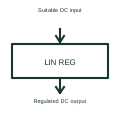
A linear regulator controls its pass element to maintain a specified output voltage from a suitable input.
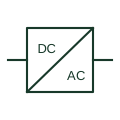
An identified interface converting electrical power between documented circuit forms.

An identified electrical connection point linking schematic and wiring information.
Elora Grid helps electrical teams work with drawings, specifications and equipment information. Explore the drafting workflow or join the early-access waitlist.