ATS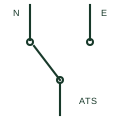
Automatic transfer switch
A mechanically switched changeover device that automatically moves a load from a failed normal source to an alternate source.
SLD / Schematic
A transfer switch that briefly parallels two synchronised sources so the load moves without interruption.
In plain English
A closed-transition transfer switch connects the load to the new source before disconnecting it from the old one, with both sources paralleled for a short time, typically less than 100 milliseconds. A synchronism check confirms that voltage, frequency and phase angle are within limits before the overlap is allowed.
Drawings show two switching devices or a transfer switch with both contacts able to close, plus a synchronism check function and often a note on maximum overlap time. Where the overlap is longer than the network operator allows, a soft-load transfer with a paralleling controller is used instead.
Even a momentary parallel connection can require approval from the network operator and protection against the generator feeding a utility fault. The symbol does not show the overlap timer, its backup trip or the interface protection.
A transfer switch that briefly parallels two synchronised sources so the load moves without interruption. A closed-transition switch overlaps the two sources; an open-transition switch always breaks before it makes.
Read the source: Transfer switch fundamentals · ATS controllers
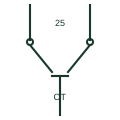
A closed-transition transfer switch connects the load to the new source before disconnecting it from the old one, with both sources paralleled for a short time, typically less than 100 milliseconds. A synchronism check confirms that voltage, frequency and phase angle are within limits before the overlap is allowed.
Drawings show two switching devices or a transfer switch with both contacts able to close, plus a synchronism check function and often a note on maximum overlap time. Where the overlap is longer than the network operator allows, a soft-load transfer with a paralleling controller is used instead.
Even a momentary parallel connection can require approval from the network operator and protection against the generator feeding a utility fault. The symbol does not show the overlap timer, its backup trip or the interface protection.
A closed-transition switch overlaps the two sources; an open-transition switch always breaks before it makes.
These public references support the explanation and provide further detail. Their graphics and downloadable files remain with their publishers.
Public transfer switch fundamentals including transition types.
Public transfer controller page describing overlap switching.
This illustration was authored independently by Elora Grid to explain the concept. It is not reproduced from a customer drawing, an official standard graphic or a manufacturer CAD file. Its correspondence to an exact IEC or IEEE symbol identifier has not been certified.
SVG and DXF downloads contain this original artwork. DXF uses unscaled drawing units; a GA envelope supplies no product dimensions, clearances or fabrication information. Original artwork is available under CC BY 4.0. Third-party references retain their own terms.
A mechanically switched changeover device that automatically moves a load from a failed normal source to an alternate source.

Checks documented synchronising conditions before a permitted connection.

An equipment assembly connecting a load to the selected supply source.
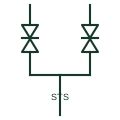
A thyristor-based switch that transfers a load between two synchronised sources within a quarter cycle.
Elora Grid helps electrical teams work with drawings, specifications and equipment information. Explore the drafting workflow or join the early-access waitlist.