J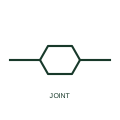
Cable straight-through joint
A joint connecting two lengths of the same cable in line, drawn as a mark on the cable route.
IEC
A joint connecting two different cable types, such as paper-insulated to polymeric or land cable to submarine cable.
In plain English
A transition joint joins cables of different construction, for example a legacy paper-insulated lead-sheathed cable to a modern XLPE cable, or a submarine cable to a land cable at a landfall. The drawing distinguishes it from an ordinary joint because the two sides have different ratings, impedances and maintenance requirements.
The symbol does not tell you the rating of each side. The circuit rating is set by the weaker section, so readers should check the cable data on both sides of the transition. Screen and sheath bonding at transitions often changes arrangement and should be read from the bonding diagram.
Compare cable types and ratings on both sides of the transition. Check bonding changes at the transition. A transition joint joins dissimilar cables; a straight-through joint joins two lengths of the same type.
A joint connecting two different cable types, such as paper-insulated to polymeric or land cable to submarine cable. A transition joint joins dissimilar cables; a straight-through joint joins two lengths of the same type.
Read the source: Elastimold underground cable accessories · IEC-60617 symbol preview directory
Independent IEC-context illustration; not certified IEC geometry.
Shown as an independently authored educational illustration. Use the cited publication and drawing legend to verify the required drafting form.
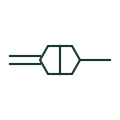
A transition joint joins cables of different construction, for example a legacy paper-insulated lead-sheathed cable to a modern XLPE cable, or a submarine cable to a land cable at a landfall. The drawing distinguishes it from an ordinary joint because the two sides have different ratings, impedances and maintenance requirements.
The symbol does not tell you the rating of each side. The circuit rating is set by the weaker section, so readers should check the cable data on both sides of the transition. Screen and sheath bonding at transitions often changes arrangement and should be read from the bonding diagram.
A transition joint joins dissimilar cables; a straight-through joint joins two lengths of the same type.
These public references support the explanation and provide further detail. Their graphics and downloadable files remain with their publishers.
Manufacturer context for underground cable joints and transitions.
Public directory of IEC-oriented symbol families.
This illustration was authored independently by Elora Grid to explain the concept. It is not reproduced from a customer drawing, an official standard graphic or a manufacturer CAD file. Its correspondence to an exact IEC or IEEE symbol identifier has not been certified.
SVG and DXF downloads contain this original artwork. DXF uses unscaled drawing units; a GA envelope supplies no product dimensions, clearances or fabrication information. Original artwork is available under CC BY 4.0. Third-party references retain their own terms.
A joint connecting two lengths of the same cable in line, drawn as a mark on the cable route.
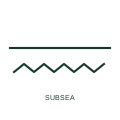
A cable section marked as laid under water, such as a river crossing, offshore export cable or lake crossing.
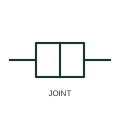
An assembly joining power-cable sections while maintaining the required conductor, insulation, screen and environmental interfaces.
Elora Grid helps electrical teams work with drawings, specifications and equipment information. Explore the drafting workflow or join the early-access waitlist.