N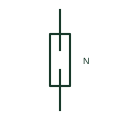
Neutral link, open
A neutral link drawn removed or open, showing the neutral conductor disconnected at that point.
IEC
A removable link in the neutral conductor shown in its closed position, allowing the neutral to be opened for testing.
In plain English
A neutral link is a bolted or plug-in link in the neutral conductor, often mounted in a fuse carrier style holder alongside phase fuses. It allows the neutral of a circuit to be disconnected for insulation testing or fault finding without disturbing other circuits on the neutral bar. The closed form shows its normal service state.
The symbol is not a switch and the link should not be opened under load. It does not provide overcurrent protection; the fuse-like holder can mislead readers into treating it as a neutral fuse. Rules on whether the neutral may be separately disconnected differ between earthing schemes.
Do not read the holder as a fuse. Confirm the link is opened only with the circuit isolated. A closed neutral link is a removable connection; a neutral fuse would be a protective device and is generally not permitted.
A removable link in the neutral conductor shown in its closed position, allowing the neutral to be opened for testing. A closed neutral link is a removable connection; a neutral fuse would be a protective device and is generally not permitted.
Read the source: Fuse and neutral-link symbols · Definition of standardised earthing schemes
Autodesk IEC-60617 Symbol Preview: Fuses (Neutral Link - Closed); vendor family reference, not certified IEC geometry.
Shown as an independently authored educational illustration. Use the cited publication and drawing legend to verify the required drafting form.
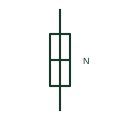
A neutral link is a bolted or plug-in link in the neutral conductor, often mounted in a fuse carrier style holder alongside phase fuses. It allows the neutral of a circuit to be disconnected for insulation testing or fault finding without disturbing other circuits on the neutral bar. The closed form shows its normal service state.
The symbol is not a switch and the link should not be opened under load. It does not provide overcurrent protection; the fuse-like holder can mislead readers into treating it as a neutral fuse. Rules on whether the neutral may be separately disconnected differ between earthing schemes.
A closed neutral link is a removable connection; a neutral fuse would be a protective device and is generally not permitted.
These public references support the explanation and provide further detail. Their graphics and downloadable files remain with their publishers.
Public IEC-oriented preview listing neutral link closed and open forms.
Public installation-guide definitions of the neutral's role in earthing schemes.
This illustration was authored independently by Elora Grid to explain the concept. It is not reproduced from a customer drawing, an official standard graphic or a manufacturer CAD file. Its correspondence to an exact IEC or IEEE symbol identifier has not been certified.
SVG and DXF downloads contain this original artwork. DXF uses unscaled drawing units; a GA envelope supplies no product dimensions, clearances or fabrication information. Original artwork is available under CC BY 4.0. Third-party references retain their own terms.
A neutral link drawn removed or open, showing the neutral conductor disconnected at that point.
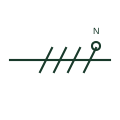
A mark on a single-line conductor group identifying which conductor is the neutral, often drawn as a small circle on a stroke.

An overcurrent protective element that interrupts a circuit by melting its fuse link.
Elora Grid helps electrical teams work with drawings, specifications and equipment information. Explore the drafting workflow or join the early-access waitlist.