BSC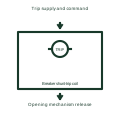
Breaker shunt-trip coil
Uses an externally supplied electrical pulse to release the breaker opening mechanism.
Functional block
Explore electrical symbols, functional blocks and circuit arrangements for switchgear, switchrooms, substations, switchyards and microgrids. Detailed explanations, drawing notes, public sources and original SVG/DXF illustrations.
Uses an externally supplied electrical pulse to release the breaker opening mechanism.
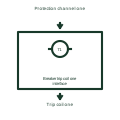
Identifies the first opening coil in a breaker with separately wired trip paths.
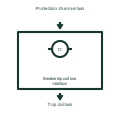
Identifies the second opening coil and its separately documented protection channel.
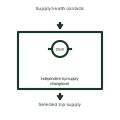
Selects an available supply for a documented trip circuit without merging the two source circuits.
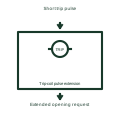
Maintains an opening command for the duration required by the selected operating mechanism.
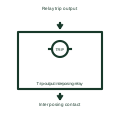
Transfers a protective-relay output to an opening circuit with a different electrical duty.
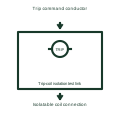
Provides a documented disconnect point between a trip output and its operating coil.
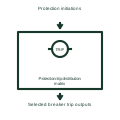
Routes each protection initiation to the breakers assigned to the affected protection zone.
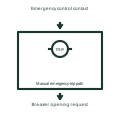
Shows the hardwired opening request issued by the designated emergency control station.
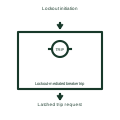
Passes a protection initiation through a latched lockout function before the assigned breaker trips.
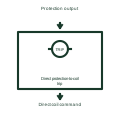
Shows an opening output connected to the breaker trip circuit without an intervening lockout function.
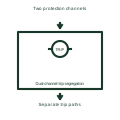
Keeps the two documented opening-command channels electrically identifiable through the terminal strip.
Understand symbols, equipment tags and function numbers—and know when a generic object needs a manufacturer drawing.
In plain English
Electrical symbols are shorthand for equipment, functions and connections. They let you follow how a circuit works without drawing every physical detail.
On a microgrid single-line diagram, a current-transformer symbol marks a measurement point and a breaker symbol marks where a circuit can be disconnected. Their labels identify the actual equipment.
Follow the connected lines to trace power or control signals. Use the project legend to interpret symbols and the selected manufacturer's drawings for dimensions and terminal connections.