CB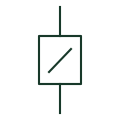
Circuit breaker
A switching device that can interrupt a circuit, with specified fault-interruption capability.
SLD / Schematic
Explore electrical symbols, functional blocks and circuit arrangements for switchgear, switchrooms, substations, switchyards and microgrids. Detailed explanations, drawing notes, public sources and original SVG/DXF illustrations.
A switching device that can interrupt a circuit, with specified fault-interruption capability.
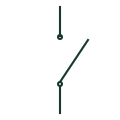
A switching device providing an electrical isolation function.
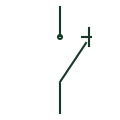
A switch with a specified capability to make and break normal load current.
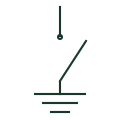
A switch used to connect an identified circuit section to earth.

An overcurrent protective element that interrupts a circuit by melting its fuse link.
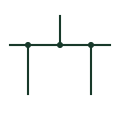
A common conductive connection distributing power to connected circuits.

Equipment transferring electrical power between winding circuits.

An electrical motor load connected to its switching and protective equipment.
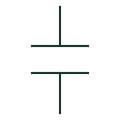
A capacitive component or bank identified with its circuit function and ratings.
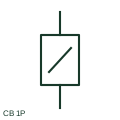
A circuit breaker interrupts one pole of a circuit.
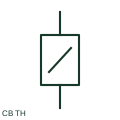
A thermal circuit breaker uses a temperature-responsive trip mechanism to detect sustained overload.
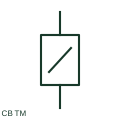
A thermal-magnetic breaker combines overload response with a magnetic response to high current.
Understand symbols, equipment tags and function numbers—and know when a generic object needs a manufacturer drawing.
In plain English
Electrical symbols are shorthand for equipment, functions and connections. They let you follow how a circuit works without drawing every physical detail.
On a microgrid single-line diagram, a current-transformer symbol marks a measurement point and a breaker symbol marks where a circuit can be disconnected. Their labels identify the actual equipment.
Follow the connected lines to trace power or control signals. Use the project legend to interpret symbols and the selected manufacturer's drawings for dimensions and terminal connections.