87
Differential protection
A function comparing documented electrical quantities across a protection zone.
Protection functions
Compares current measurements defining a motor differential protection zone.
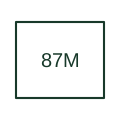
Compares current measurements defining a motor differential protection zone.
The drafting record should connect this function to the motor terminal and neutral-end CT connections or flux-balance arrangement, then trace the motor differential trip and starter or breaker interface. Keep the complete designation and equipment tag together so that the SLD, relay logic and terminal schedule describe the same implementation.
The cited mapping is a public manufacturer example (Eaton EMR family). Suffixes are not universal equivalences across products, and this reference supplies neither a protection setting nor certification of the selected scheme.
Motor differential can use percentage or flux-balance methods; the designation alone does not choose the CT arrangement.
These public references support the explanation and provide further detail. Their graphics and downloadable files remain with their publishers.
Public primary-source function or application mapping used to identify this designation; wording and drafting notes are original.
Device-number and suffix convention. This page is not a reproduction of the full licensed standard.
This illustration was authored independently by Elora Grid to explain the concept. It is not reproduced from a customer drawing, an official standard graphic or a manufacturer CAD file. Its correspondence to an exact IEC or IEEE symbol identifier has not been certified.
SVG and DXF downloads contain this original artwork. DXF uses unscaled drawing units; a GA envelope supplies no product dimensions, clearances or fabrication information. Original artwork is available under CC BY 4.0. Third-party references retain their own terms.
Elora Grid helps electrical teams work with drawings, specifications and equipment information. Explore the drafting workflow or join the early-access waitlist.