RUPS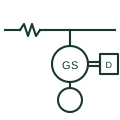
Rotary UPS
A UPS built around a rotating synchronous machine with kinetic storage, often coupled to a diesel engine for long backup.
SLD
A rotating mass coupled to a motor-generator and converter that stores energy kinetically for short, high-power bursts.
In plain English
Flywheel energy storage holds energy in a rotating mass, usually in a vacuum enclosure with magnetic or low-loss bearings. A motor-generator accelerates the rotor to charge and decelerates it to discharge, and a bidirectional converter links the variable-frequency machine to a DC bus or AC network.
Single-line diagrams show a machine circle with a flywheel mass or disc symbol on the shaft and a converter block to the bus. Flywheels appear in rotary and some static UPS systems as a battery substitute, and in microgrids for frequency regulation and ride-through of short disturbances.
Stored energy is usually small, from seconds to a few minutes at rated power, so the symbol does not imply long backup time. Standby losses, minimum speed and the energy actually usable between maximum and minimum speed must be read from the data sheet.
A rotating mass coupled to a motor-generator and converter that stores energy kinetically for short, high-power bursts. A flywheel stores kinetic energy for seconds to minutes; a battery stores chemical energy for much longer durations.
Read the source: DC UPS, AC UPS and capacitor buffer modules · Battery energy storage and power conversion

Flywheel energy storage holds energy in a rotating mass, usually in a vacuum enclosure with magnetic or low-loss bearings. A motor-generator accelerates the rotor to charge and decelerates it to discharge, and a bidirectional converter links the variable-frequency machine to a DC bus or AC network.
Single-line diagrams show a machine circle with a flywheel mass or disc symbol on the shaft and a converter block to the bus. Flywheels appear in rotary and some static UPS systems as a battery substitute, and in microgrids for frequency regulation and ride-through of short disturbances.
Stored energy is usually small, from seconds to a few minutes at rated power, so the symbol does not imply long backup time. Standby losses, minimum speed and the energy actually usable between maximum and minimum speed must be read from the data sheet.
A flywheel stores kinetic energy for seconds to minutes; a battery stores chemical energy for much longer durations.
These public references support the explanation and provide further detail. Their graphics and downloadable files remain with their publishers.
Public uninterruptible power and buffer function context.
Public energy storage system context.
This illustration was authored independently by Elora Grid to explain the concept. It is not reproduced from a customer drawing, an official standard graphic or a manufacturer CAD file. Its correspondence to an exact IEC or IEEE symbol identifier has not been certified.
SVG and DXF downloads contain this original artwork. DXF uses unscaled drawing units; a GA envelope supplies no product dimensions, clearances or fabrication information. Original artwork is available under CC BY 4.0. Third-party references retain their own terms.
A UPS built around a rotating synchronous machine with kinetic storage, often coupled to a diesel engine for long backup.
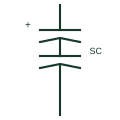
A series-parallel array of double-layer capacitor cells storing energy for very fast, short-duration power delivery.
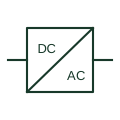
An identified interface converting electrical power between documented circuit forms.
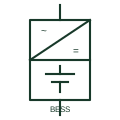
A complete battery plant block combining batteries, power conversion and controls, shown as one source or sink on an SLD.
Elora Grid helps electrical teams work with drawings, specifications and equipment information. Explore the drafting workflow or join the early-access waitlist.