Isolator
Disconnector
A switching device providing an electrical isolation function.
SLD / Schematic
A switch with a specified capability to make and break normal load current.
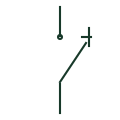
A load-break switch operates a loaded circuit under the normal conditions covered by its rating. It should not be confused with a circuit breaker, whose specified duties can include interrupting fault current. Some products combine switching and isolation, and some are used with fuses for a protection arrangement.
The SLD shows where the switch connects the circuit. Its schedule or manufacturer reference establishes the duty and capabilities. The device name, qualifiers and associated protective equipment explain more than the generic mark alone.
Fault-making, load-breaking and fault-breaking are different capabilities. Avoid using a single switch label as a substitute for the equipment specification.
These public references support the explanation and provide further detail. Their graphics and downloadable files remain with their publishers.
Public explanation of load-break switches and their relationship to protection.
This illustration was authored independently by Elora Grid to explain the concept. It is not reproduced from a customer drawing, an official standard graphic or a manufacturer CAD file. Its correspondence to an exact IEC or IEEE symbol identifier has not been certified.
SVG and DXF downloads contain this original artwork. DXF uses unscaled drawing units; a GA envelope supplies no product dimensions, clearances or fabrication information. Original artwork is available under CC BY 4.0. Third-party references retain their own terms.
A switching device providing an electrical isolation function.

A switching device that can interrupt a circuit, with specified fault-interruption capability.

An overcurrent protective element that interrupts a circuit by melting its fuse link.

A secondary-distribution switchgear assembly with a selected combination of switching functions.
Elora Grid helps electrical teams work with drawings, specifications and equipment information. Explore the drafting workflow or join the early-access waitlist.