MGC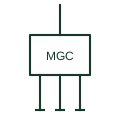
Microgrid controller
The supervisory controller that dispatches sources, storage and loads and manages islanding and reconnection of a microgrid.
SLD / Schematic
An independently authored application reference. The drawing shows the named function or circuit relationship; use the project legend and selected equipment documentation for its drafting form and connections.
Browse this installation focusIn plain English
Selects a feasible set of assigned controllable groups for the requested load reduction.
In a microgrid island, the controller can disconnect lower-priority loads when a source is lost and later request restoration when the documented reserve and stability conditions permit it. For this reference, the drawing identifies “Reduction request and group availability” at the input and “Selected shedding groups” at the output. Group power estimates can change during operation.
Start at the named input: Reduction request and group availability. Identify its source device or document and the state represented on the drawing. Follow the named output: Selected shedding groups. Cross-reference its destination and separate the command from confirmation that the equipment responded.
Read the source: Avista Shared Energy Economy microgrid protection and control case study
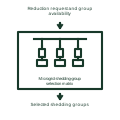
Selects a feasible set of assigned controllable groups for the requested load reduction. Load management balances the available electrical supply against the loads that remain connected. Shedding, restoration, priority and proof of disconnection are separate control functions and should remain traceable to individual load groups.
In a microgrid island, the controller can disconnect lower-priority loads when a source is lost and later request restoration when the documented reserve and stability conditions permit it. For this reference, the drawing identifies “Reduction request and group availability” at the input and “Selected shedding groups” at the output. Group power estimates can change during operation.
Identify each load group, priority, measured contribution and feedback. Shedding amounts, operating times and restoration conditions require the approved power-management design and the actual connected-load data. The functional block is an independent explanation of this named application. Equipment-specific ratings, terminal connections and operating conditions must be established in the project documentation.
Group power estimates can change during operation. This reference describes the named application; it does not establish a new IEC graphical symbol, an ANSI device-function number or an exact manufacturer connection diagram.
These public references support the explanation and provide further detail. Their graphics and downloadable files remain with their publishers.
Public technical context for microgrid load shedding and restoration. Storage, protection, black start, load restoration and coordinated island operation. The application text and educational graphic are independently authored; the publisher does not certify this representation.
This illustration was authored independently by Elora Grid to explain the concept. It is not reproduced from a customer drawing, an official standard graphic or a manufacturer CAD file. Its correspondence to an exact IEC or IEEE symbol identifier has not been certified.
SVG and DXF downloads contain this original artwork. Original artwork is available under CC BY 4.0. Third-party references retain their own terms.
The supervisory controller that dispatches sources, storage and loads and manages islanding and reconnection of a microgrid.
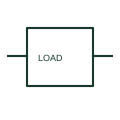
A generic electrical load identifies a documented consuming circuit or aggregate load on an SLD.
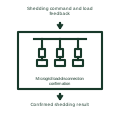
Checks the assigned feedback that a selected load group has disconnected.
Elora Grid helps electrical teams work with drawings, specifications and equipment information. Explore the drafting workflow or join the early-access waitlist.