GA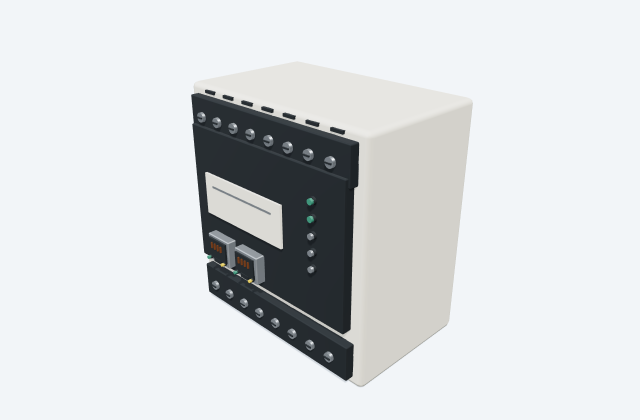
Substation RTU
A substation RTU provides the specified monitoring, control and communications interface.
General arrangement objects
An independently authored application reference. The drawing shows the named function or circuit relationship; use the project legend and selected equipment documentation for its drafting form and connections.
Browse this installation focusIn plain English
Indicates that a measurement or status has exceeded its defined freshness condition.
In a substation control building, the station controller receives bay information and forwards an operator's selected command to the correct bay device. Device feedback confirms whether the intended result actually occurred. For this reference, the drawing identifies “Data age and quality” at the input and “Stale information flag” at the output. Stale data must remain distinguishable from a current value.
Start at the named input: Data age and quality. Identify its source device or document and the state represented on the drawing. Follow the named output: Stale information flag. Cross-reference its destination and separate the command from confirmation that the equipment responded.
Read the source: SEL-2411 programmable automation controller
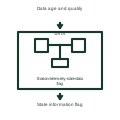
Indicates that a measurement or status has exceeded its defined freshness condition. Station automation collects measurements and statuses and issues assigned commands through defined authority paths. A communicated point has a value, quality and equipment identity; it should not be treated as an unexplained contact.
In a substation control building, the station controller receives bay information and forwards an operator's selected command to the correct bay device. Device feedback confirms whether the intended result actually occurred. For this reference, the drawing identifies “Data age and quality” at the input and “Stale information flag” at the output. Stale data must remain distinguishable from a current value.
Document the point mapping, source, destination, command authority and failure behavior. A communication interface block explains information flow and does not certify network security or control-system availability. The functional block is an independent explanation of this named application. Equipment-specific ratings, terminal connections and operating conditions must be established in the project documentation.
Stale data must remain distinguishable from a current value. This reference describes the named application; it does not establish a new IEC graphical symbol, an ANSI device-function number or an exact manufacturer connection diagram.
These public references support the explanation and provide further detail. Their graphics and downloadable files remain with their publishers.
Public technical context for substation automation and command interfaces. Station I/O, alarms, event recording, command and communications interfaces. The application text and educational graphic are independently authored; the publisher does not certify this representation.
This illustration was authored independently by Elora Grid to explain the concept. It is not reproduced from a customer drawing, an official standard graphic or a manufacturer CAD file. Its correspondence to an exact IEC or IEEE symbol identifier has not been certified.
SVG and DXF downloads contain this original artwork. Original artwork is available under CC BY 4.0. Third-party references retain their own terms.
A substation RTU provides the specified monitoring, control and communications interface.
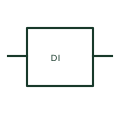
A PLC digital input reads a documented discrete electrical state from field wiring.
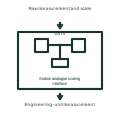
Maps the source measurement representation to the assigned station engineering quantity.
Elora Grid helps electrical teams work with drawings, specifications and equipment information. Explore the drafting workflow or join the early-access waitlist.