TGAI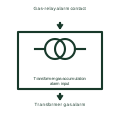
Transformer gas-accumulation alarm input
Receives the defined gas-accumulation alarm from an applicable liquid-filled transformer gas relay.
Functional block
Explore electrical symbols, functional blocks and circuit arrangements for switchgear, switchrooms, substations, switchyards and microgrids. Detailed explanations, drawing notes, public sources and original SVG/DXF illustrations.
Receives the defined gas-accumulation alarm from an applicable liquid-filled transformer gas relay.
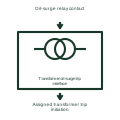
Transfers the applicable gas relay's oil-surge trip indication to the assigned protection logic.
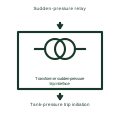
Receives the defined sudden-pressure protection contact for the assigned transformer tank.
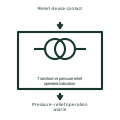
Reports operation of the installed pressure-relief device independently of electrical fault detection.
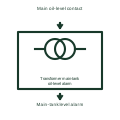
Reports the documented low or abnormal oil-level condition in the main tank system.
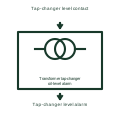
Separates the tap-changer oil-system level indication from the transformer main-tank indication.
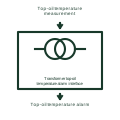
Receives the measured top-oil temperature condition used for the defined alarm action.
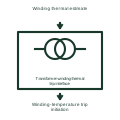
Carries the selected winding thermal protection result to the assigned trip logic.
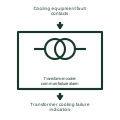
Collects the assigned transformer-cooling equipment failures into a clearly named bay alarm.
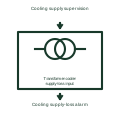
Reports loss of the monitored electrical supply to the transformer cooling system.
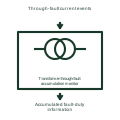
Records the defined exposure of the transformer to external fault-current events.
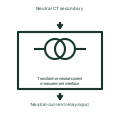
Identifies the separately measured transformer neutral-current signal serving the assigned protection input.
Understand symbols, equipment tags and function numbers—and know when a generic object needs a manufacturer drawing.
In plain English
Electrical symbols are shorthand for equipment, functions and connections. They let you follow how a circuit works without drawing every physical detail.
On a microgrid single-line diagram, a current-transformer symbol marks a measurement point and a breaker symbol marks where a circuit can be disconnected. Their labels identify the actual equipment.
Follow the connected lines to trace power or control signals. Use the project legend to interpret symbols and the selected manufacturer's drawings for dimensions and terminal connections.